DTM
Sensors, signal, tight space
Size 20
7.5 A
- Wire
- 18-24 AWG
- Positions
- 2-12
Select the housings, wedgelocks, size-16 contacts, cavity plugs, boots, and pin numbering for a sealed 2 to 12 position DT connection.
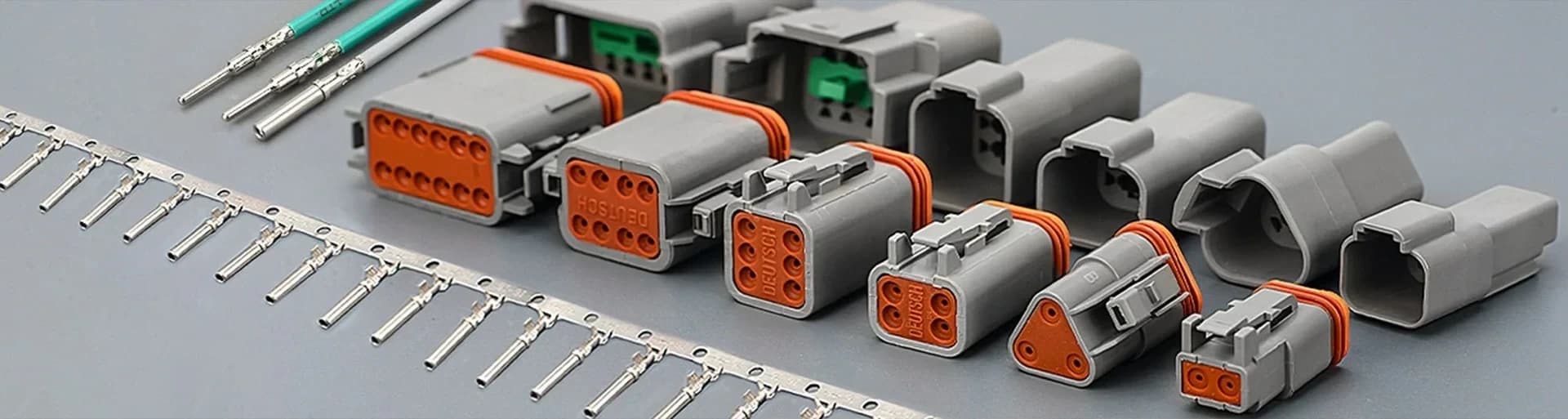
Deutsch dates back to 1938 and built its name in harsh-environment connectors for aerospace, defense, transportation, and industrial equipment. DT is the rectangular thermoplastic family that carried that sealed, removable-contact architecture into work trucks, off-road equipment, and field harnesses.
TE Connectivity acquired Deutsch in 2012. Amphenol AT is the intermateable alternate-source family for the same DT footprint, so standard builds can spec DT and AT options side by side instead of depending on one supply chain.
DT exists for harness breakpoints that cannot be allowed to corrode, shake loose, or become permanent. It gives a serviceable disconnect between a harness and a sensor, lamp, motor, or equipment module while keeping water, dust, and vibration out of the electrical joint.
The system works because the seal and lock are built into the connector stack: matched plug and receptacle housings, crimped size-16 contacts, rear wire seals, cavity plugs for unused positions, and a secondary wedgelock that blocks contacts from backing out.
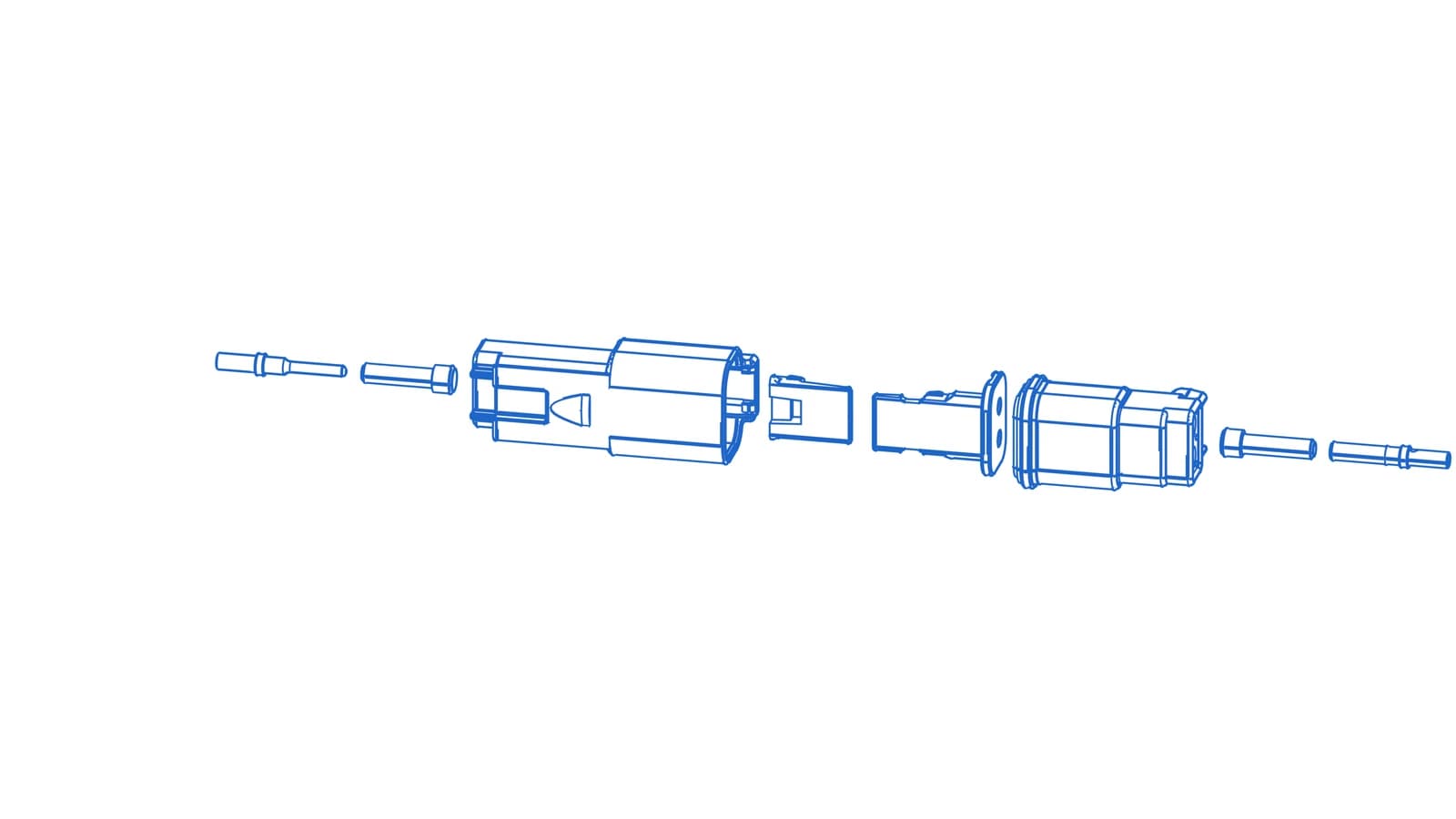
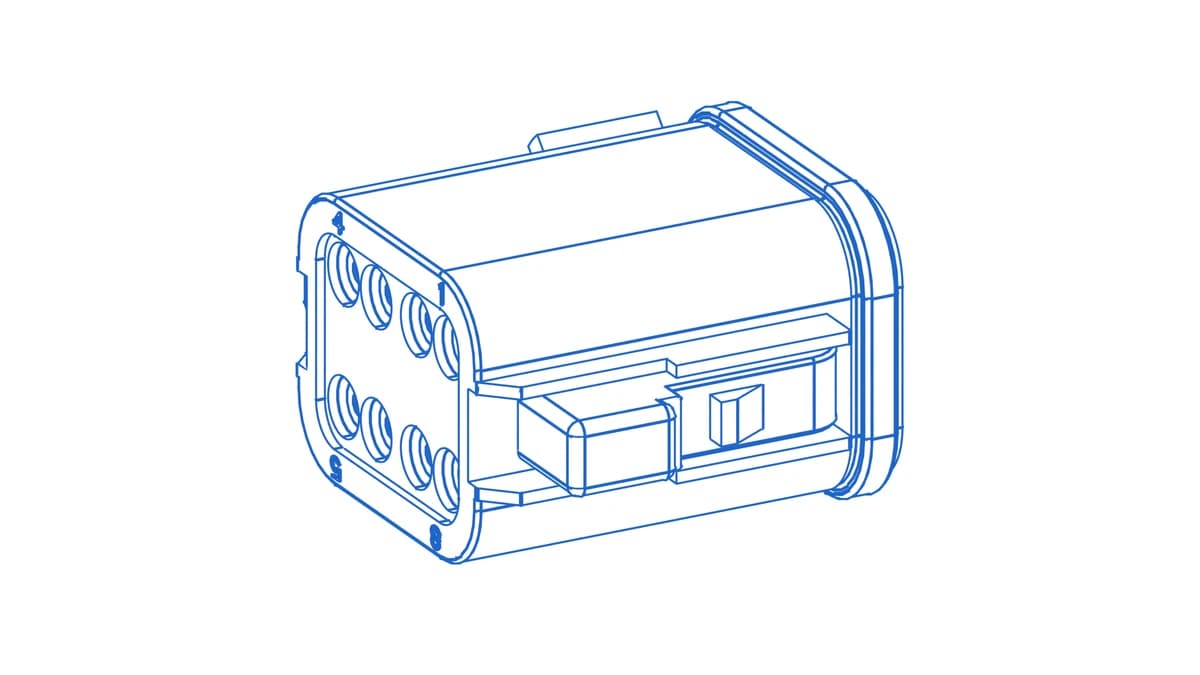
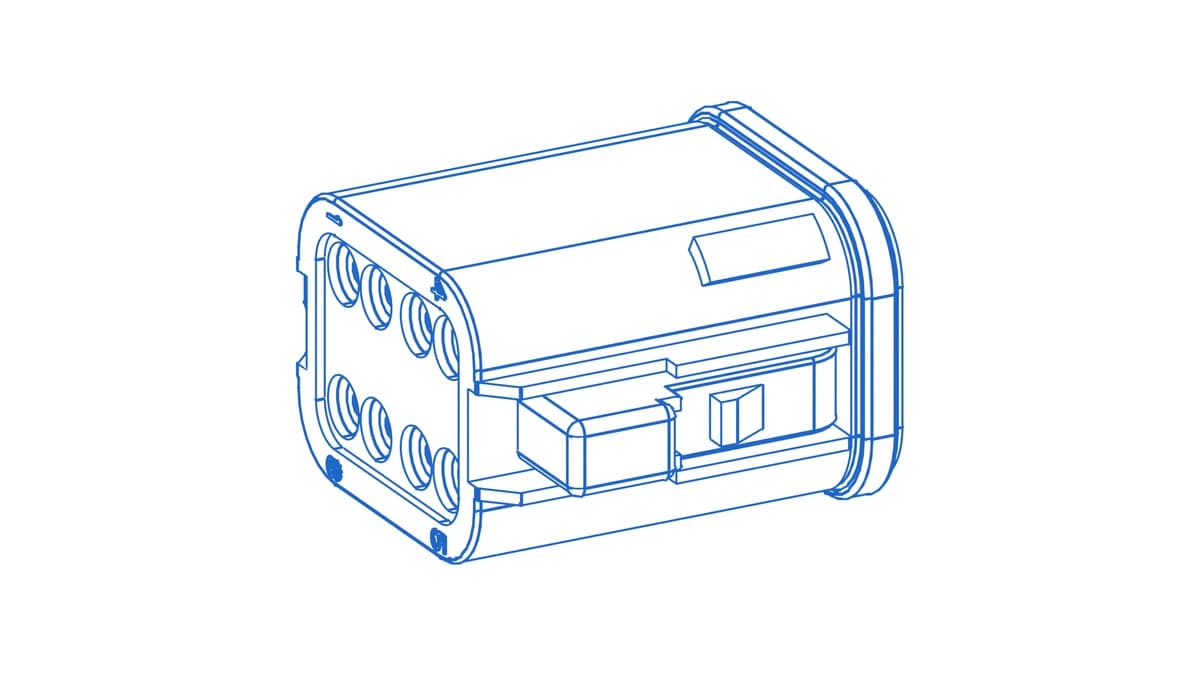
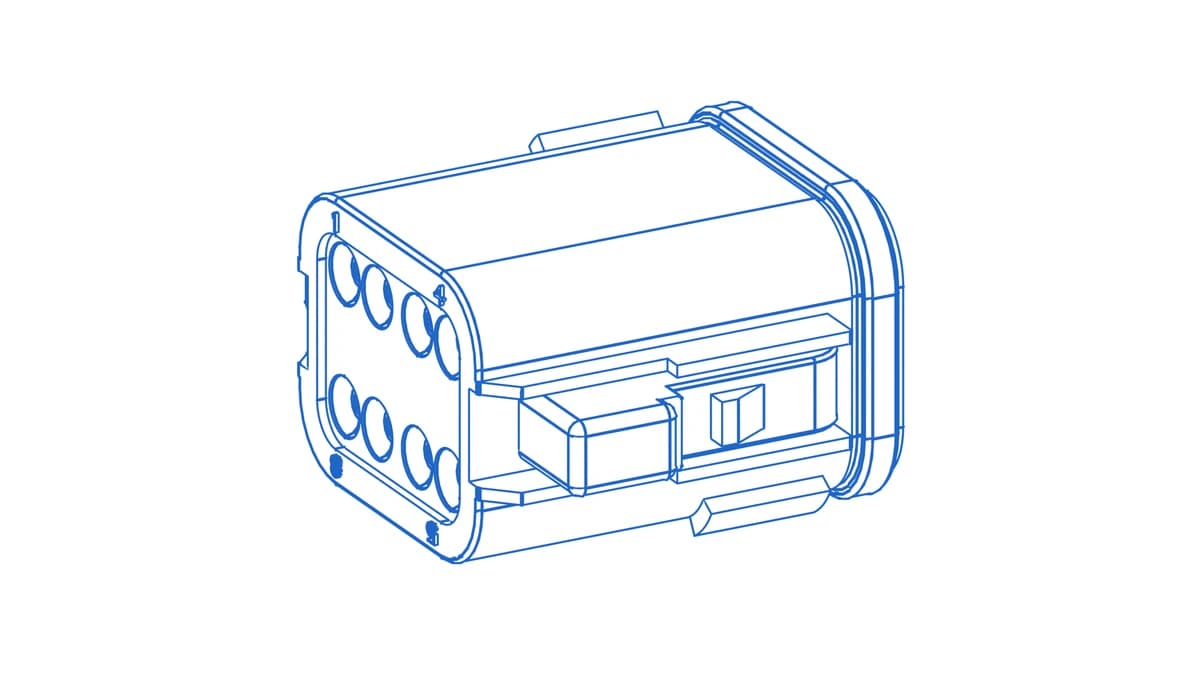
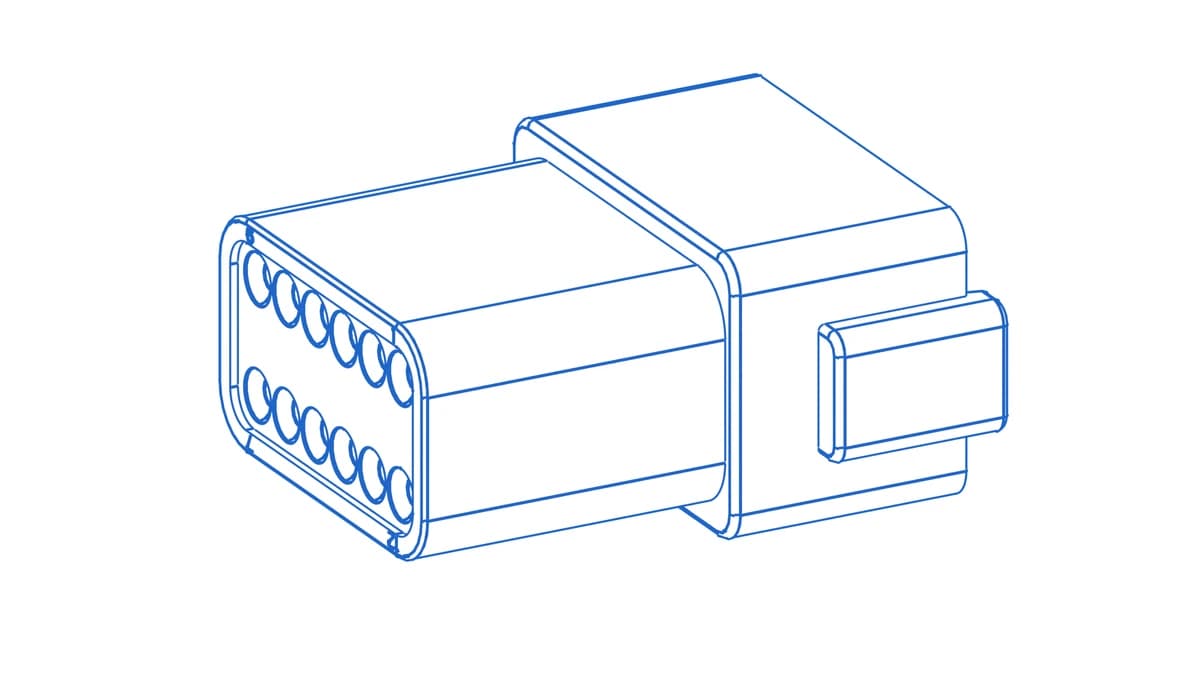
Terminology: DT04 is the receptacle housing for pin contacts, DT06 is the plug housing for socket contacts, and P/S in the housing part number indicates the accepted contact side.
DT is the practical sealed connector for mid-current harness work: rugged enough for vehicles and equipment, common enough to source quickly, and serviceable in the field.
Move a circuit or replace a contact without rebuilding the whole harness.
No solder, no press, no potting. Service work can happen where the equipment actually lives.
Standard Amphenol AT parts intermate with matching DT footprints, so common builds are not tied to one source.

Underhood heat, vibration, and fluid spray. DT's IP68 seal and 125 °C rating keep injector, sensor, and relay circuits alive where unsealed connectors corrode.

Pressure-washed, run in dust and mud for years. Sealed housings and replaceable contacts keep sensor and solenoid runs serviceable far from a bench.

Shock and vibration every shift. 25 lbf contact retention and a 20 G rating hold control, lighting, and hydraulic-sensor circuits together where solder joints crack.
Same locking system and seals, three contact sizes. Pick by current and wire gauge. They do not intermate with each other.
Sensors, signal, tight space
Mid-current: injectors, coils, relays
Power: pumps, fans, motors
| Series | Contact | Current | Wire | Positions | Use |
|---|---|---|---|---|---|
| DTM | Size 20 | 7.5 A | 18-24 AWG | 2-12 | Sensors, signal, tight space |
| DT | Size 16 | 13 A | 20-14 AWG | 2-12 | Mid-current: injectors, coils, relays |
| DTP | Size 12 | 25 A | 12-16 AWG | 2, 4 standard | Power: pumps, fans, motors |
Above 13 A, or for pumps, fans, and motors, step up to DTP. For signal-level circuits and tight spaces, DTM drops the contact to size 20. Wire range depends on the exact contact selected; DT can cover 20-14 AWG with the right size-16 contact.
Same 4-position receptacle class. Current, contact size, and wire range are the real selection criteria.
Compact signal circuits
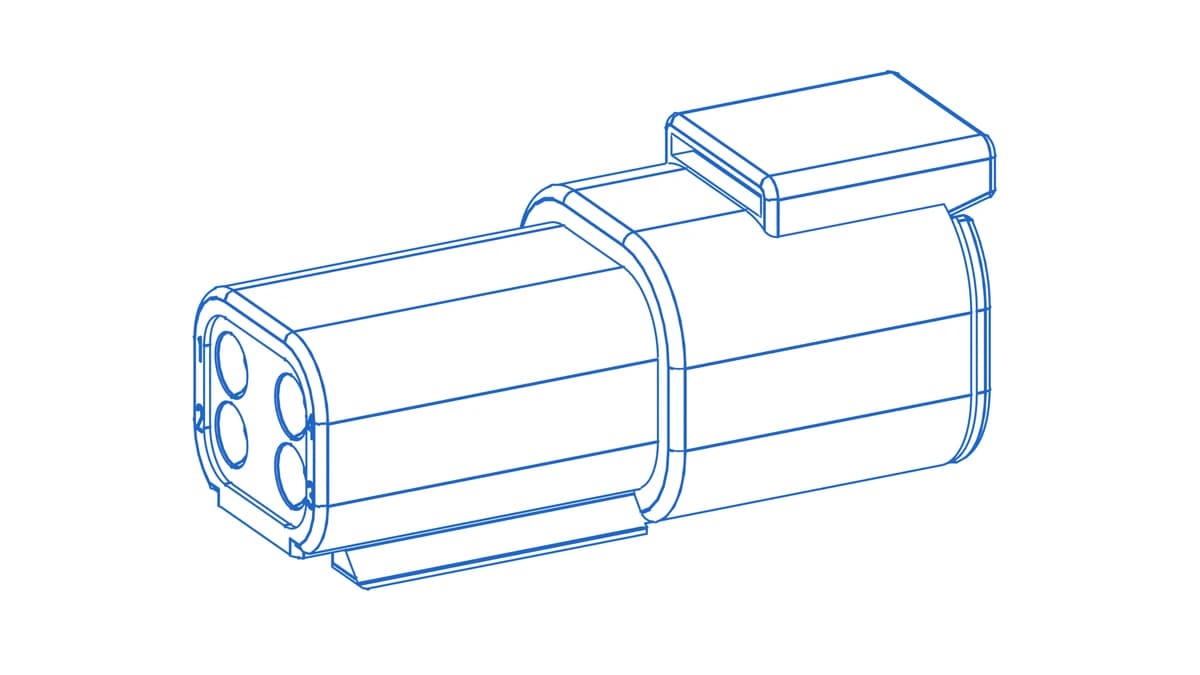
Mid-current harness work
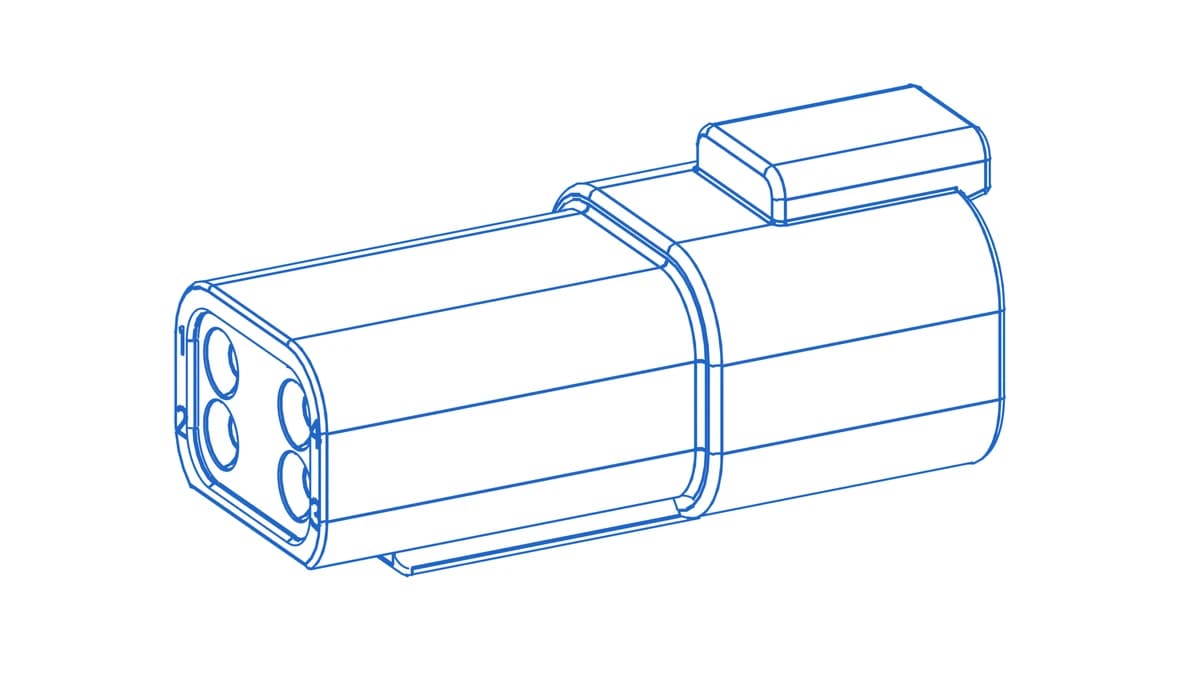
Higher-current power runs
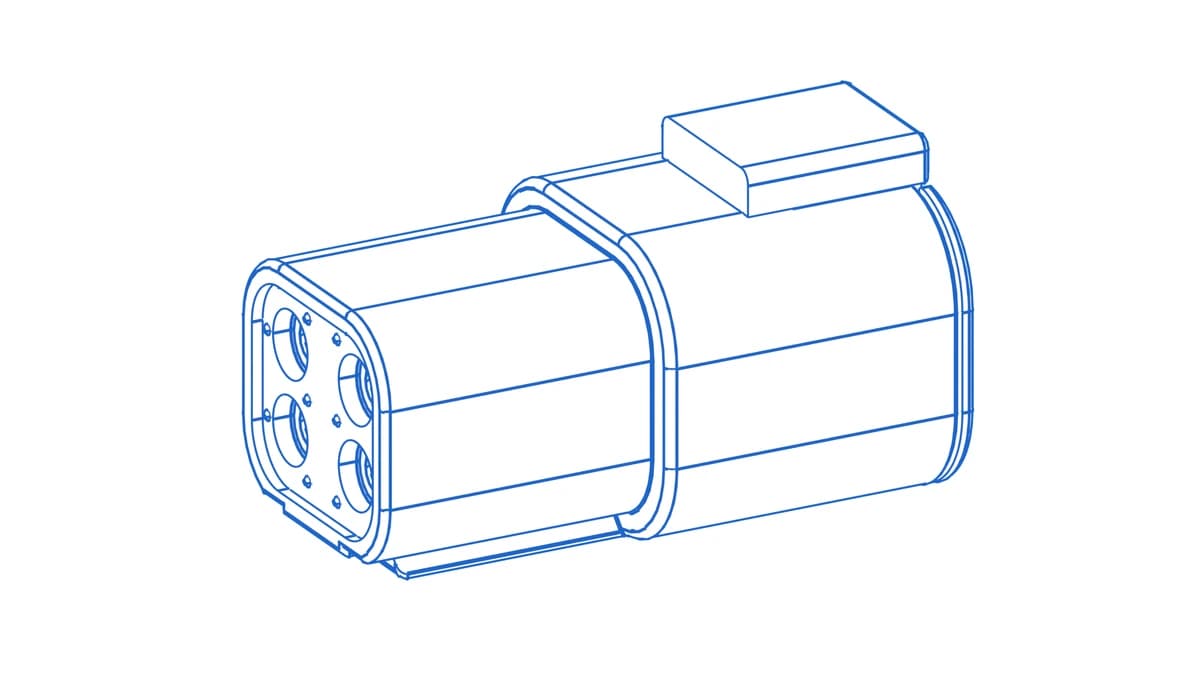
Use DT for sealed size-16 circuits up to 13 A. Current depends on the selected contact and wire; the shell does not make a small wire safe for 13 A.
Source: TE Connectivity specification 108-151009 Rev E and manufacturer part data. Verify pressure-wash ratings against the exact selected DT/AT part.
The rear seal grips a range of insulation OD, not a gauge. Too thin and water gets past the grommet, and your IP rating is gone. This is the single most common reason a sealed connector leaks.
Match insulation OD to the seal, not just AWG. For thin wire, use a reduced (E) seal or thicker insulation. Silicone wire seals well; the insertion force through the grommet is just higher.
Pick the position count first: 2, 3, 4, 6, 8, or 12 cavities. Then use keying when two connectors of the same size could be plugged into the wrong mate.
The catalog chart below shows the standard size-16 DT insert arrangements. Actual cavity numbers are molded into the housing and should be checked against the selected part face, because wire side and mating face are mirrored.
Catalog configurations for DT and DT bussed size-16 shells. Position count changes both housing size and cavity layout.
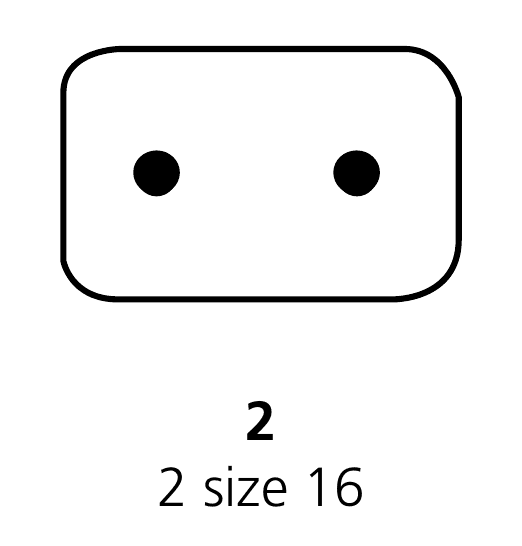
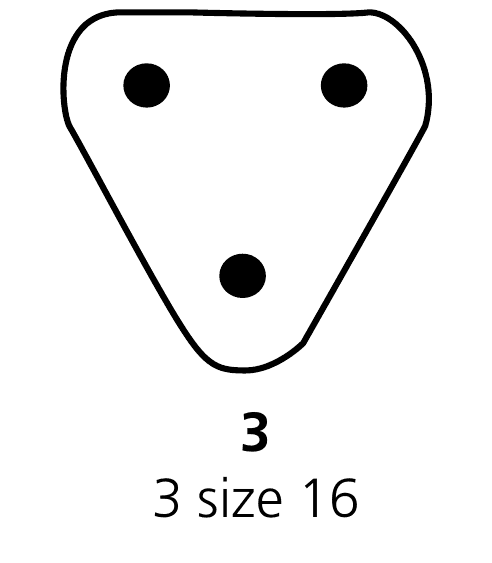
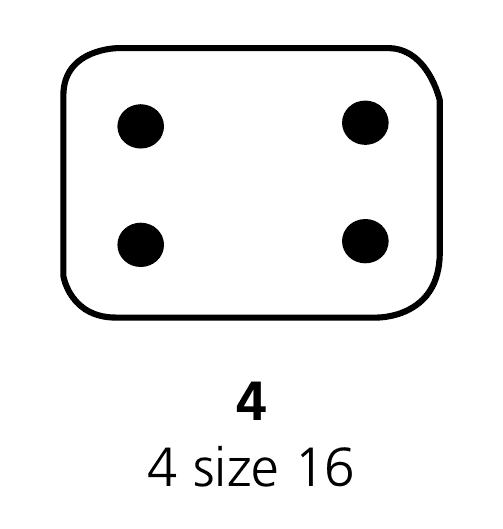
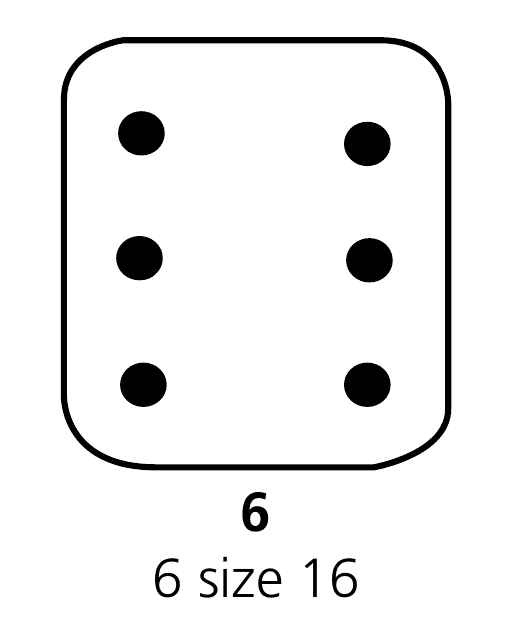
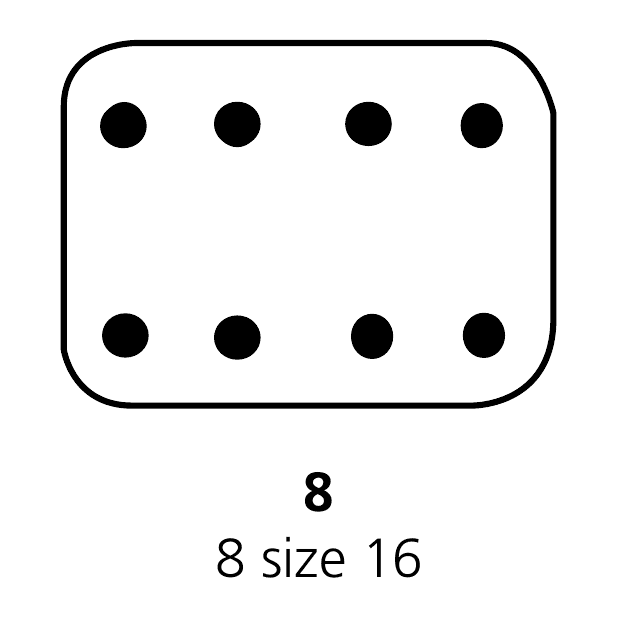
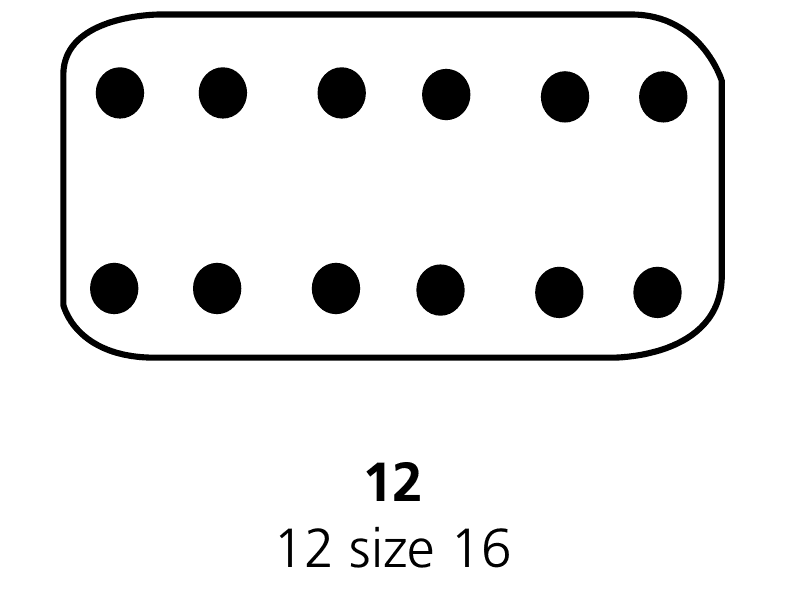
Source crop: Deutsch DT Series Technical Manual, DT and DT bussed size-16 configurations.
On 8- and 12-way DT, A through D keying is built into the housing body. On 2- and 4-way DT, keyed wedgelock sets provide the keyed variants while the main housing stays the standard body.
Example 2-way keyed wedges. A keyed plug wedge pairs with the matching receptacle wedge.
Plug W2SA-P012
Receptacle W2PA
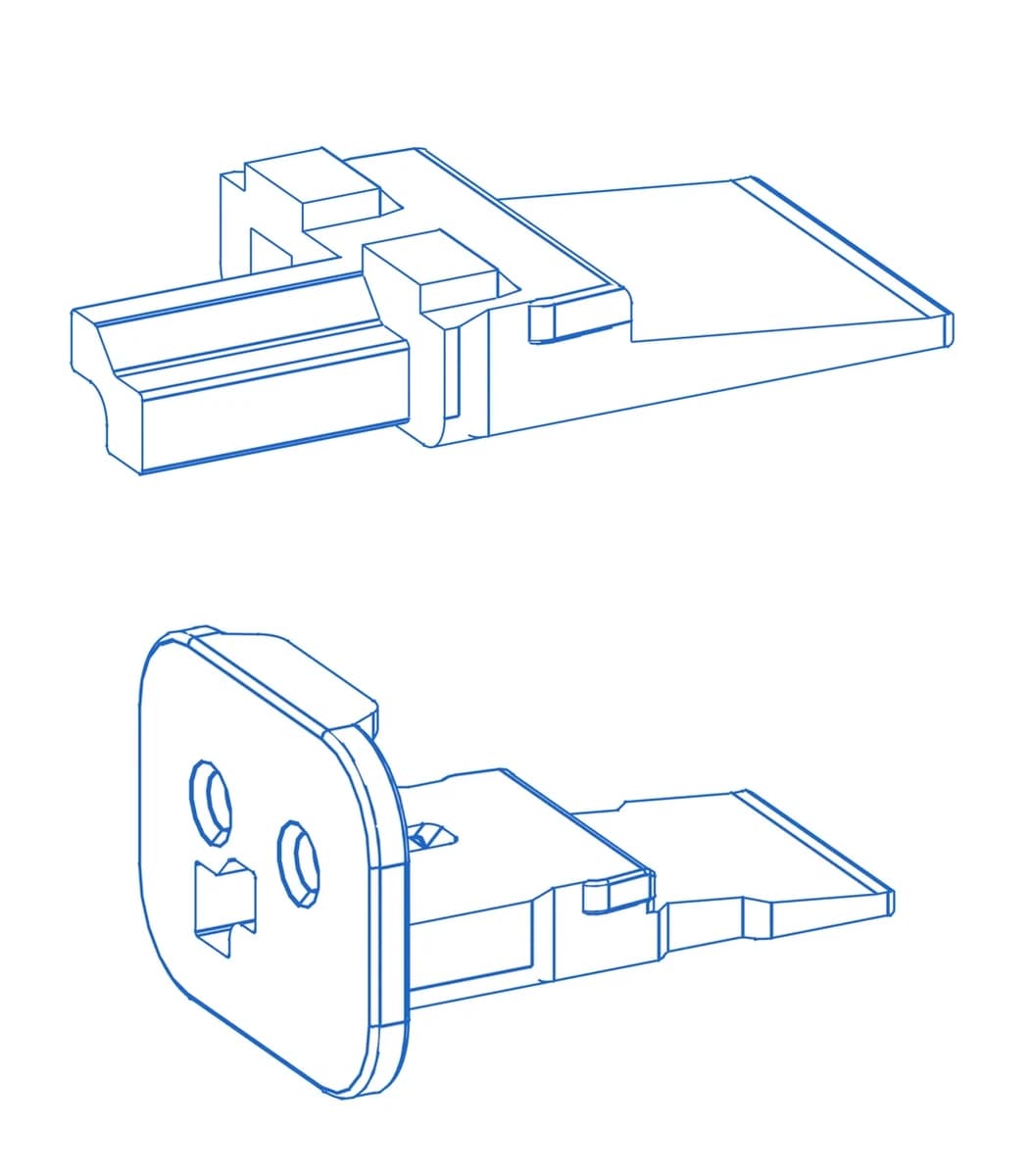
Plug W2SB-P012
Receptacle W2PB
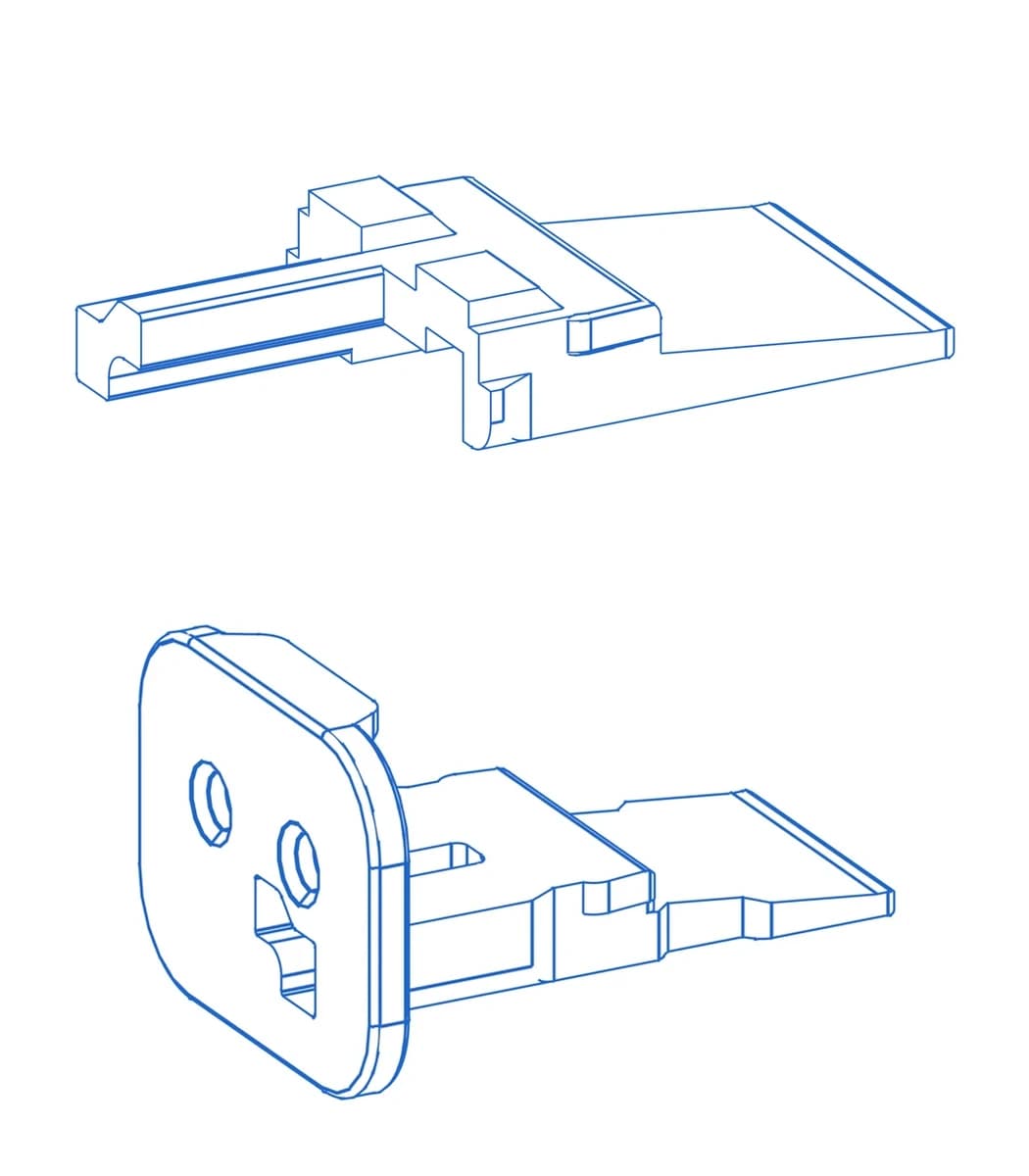
Plug W2SC-P012
Receptacle W2PC
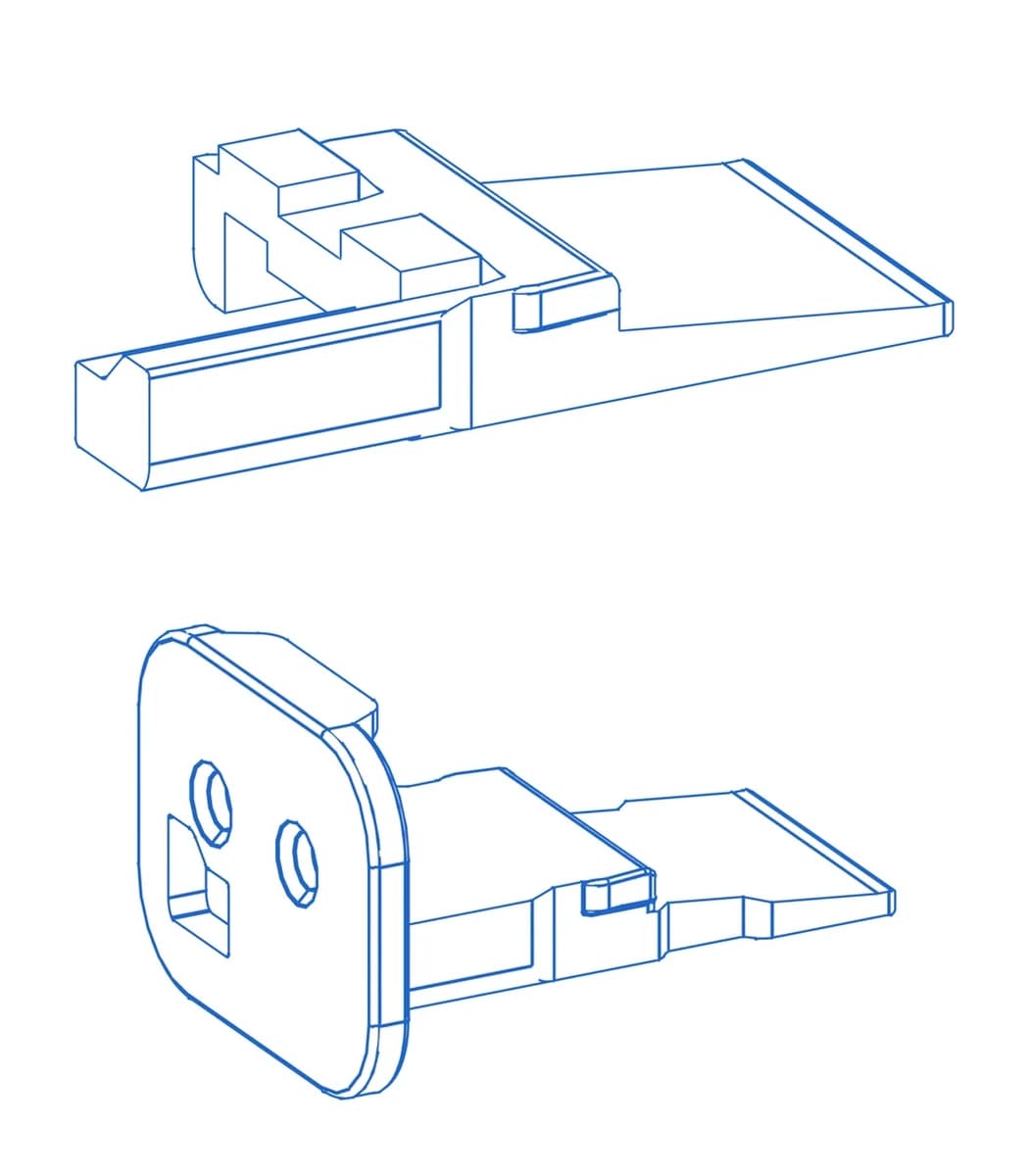
Plug W2SD-P012
Receptacle W2PD
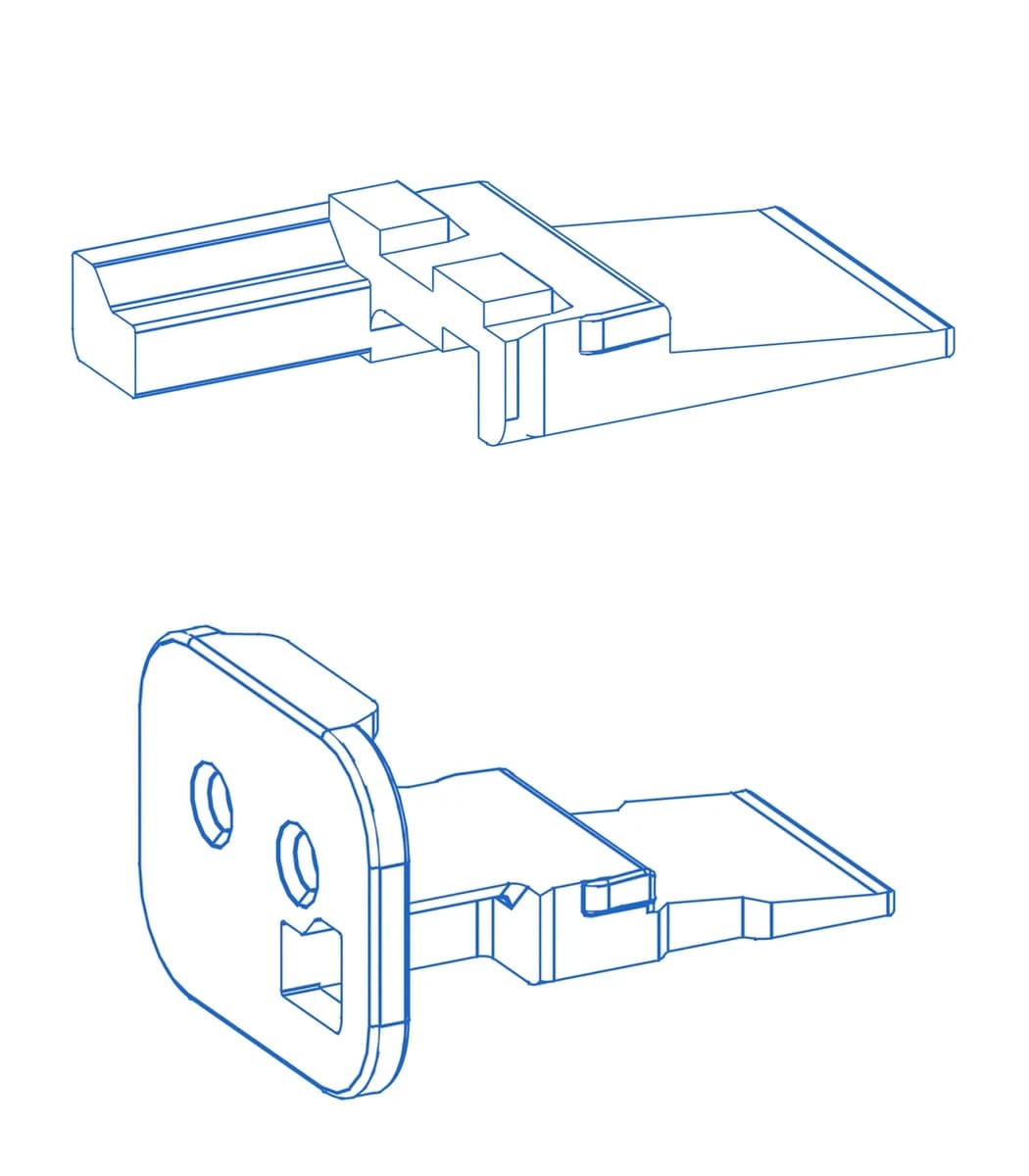
A through D keyed housings prevent look-alike 8- and 12-position connectors from mating.
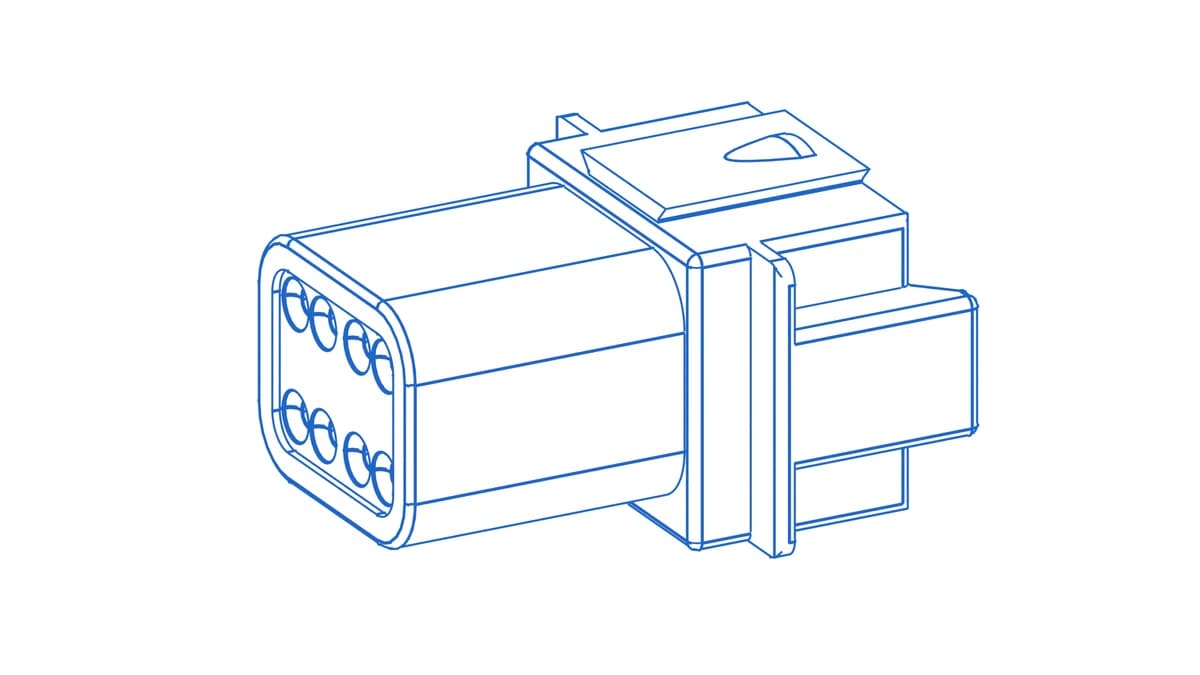
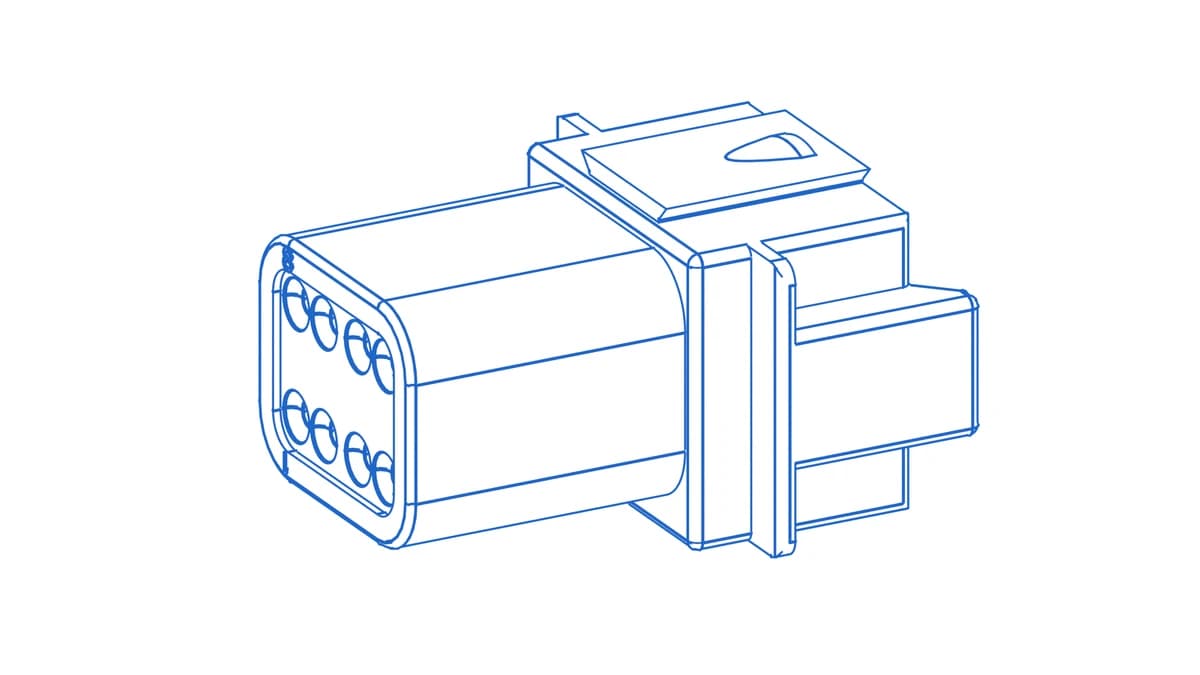
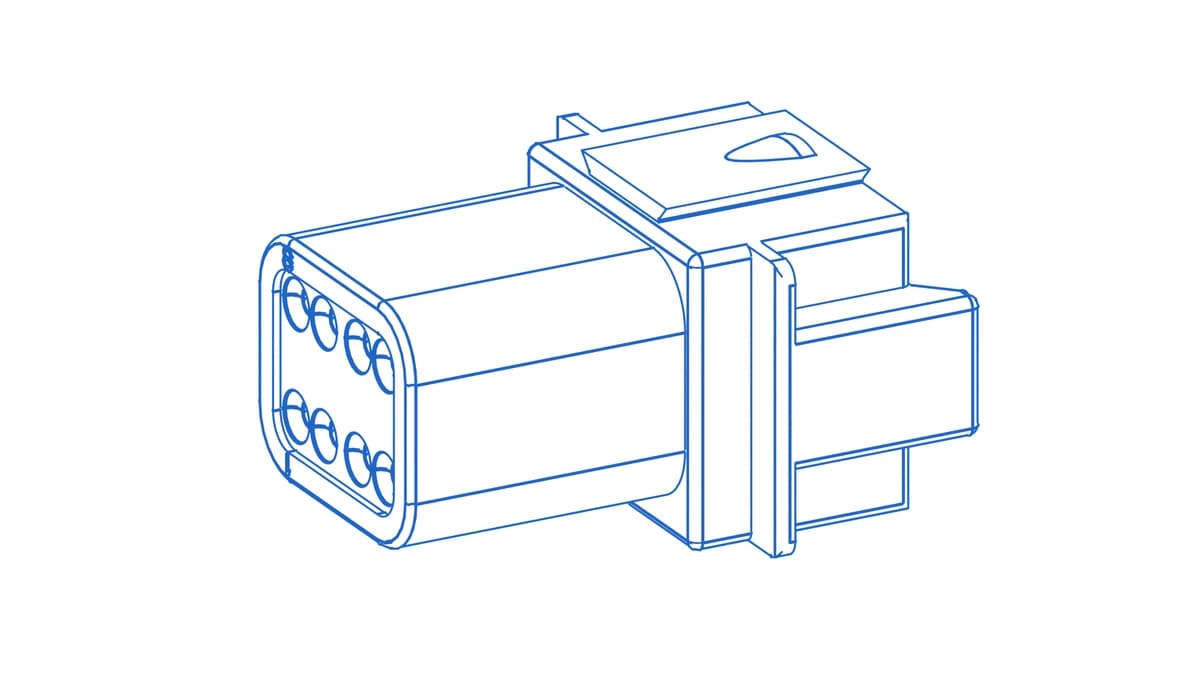
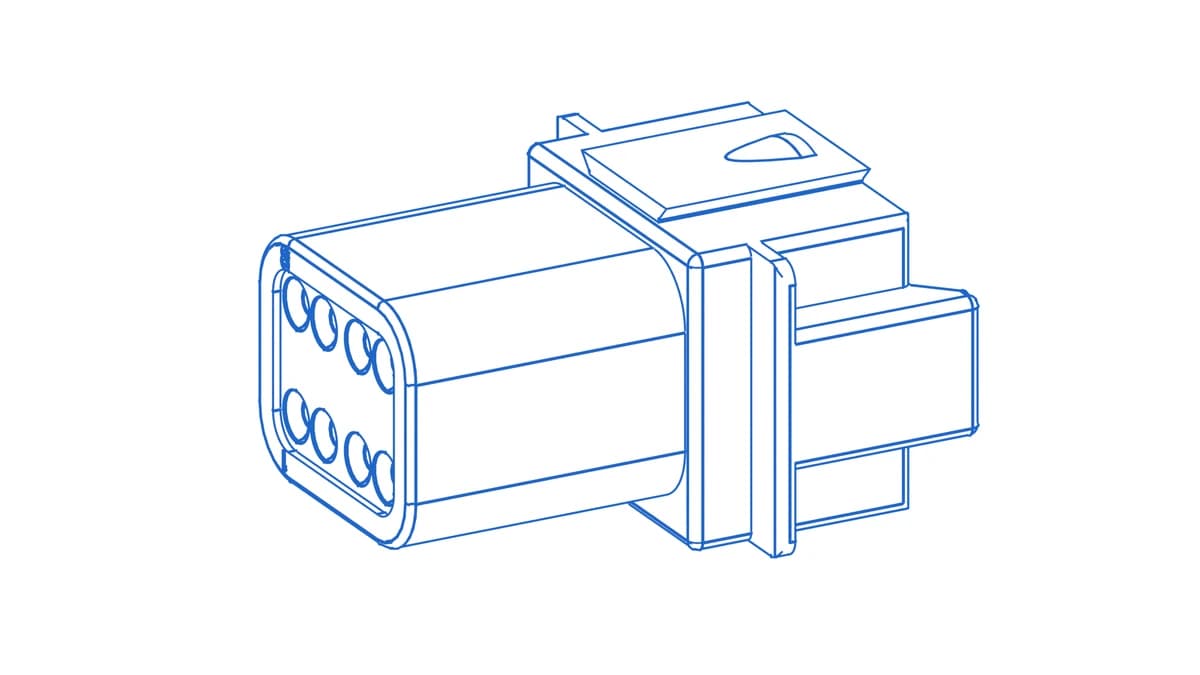
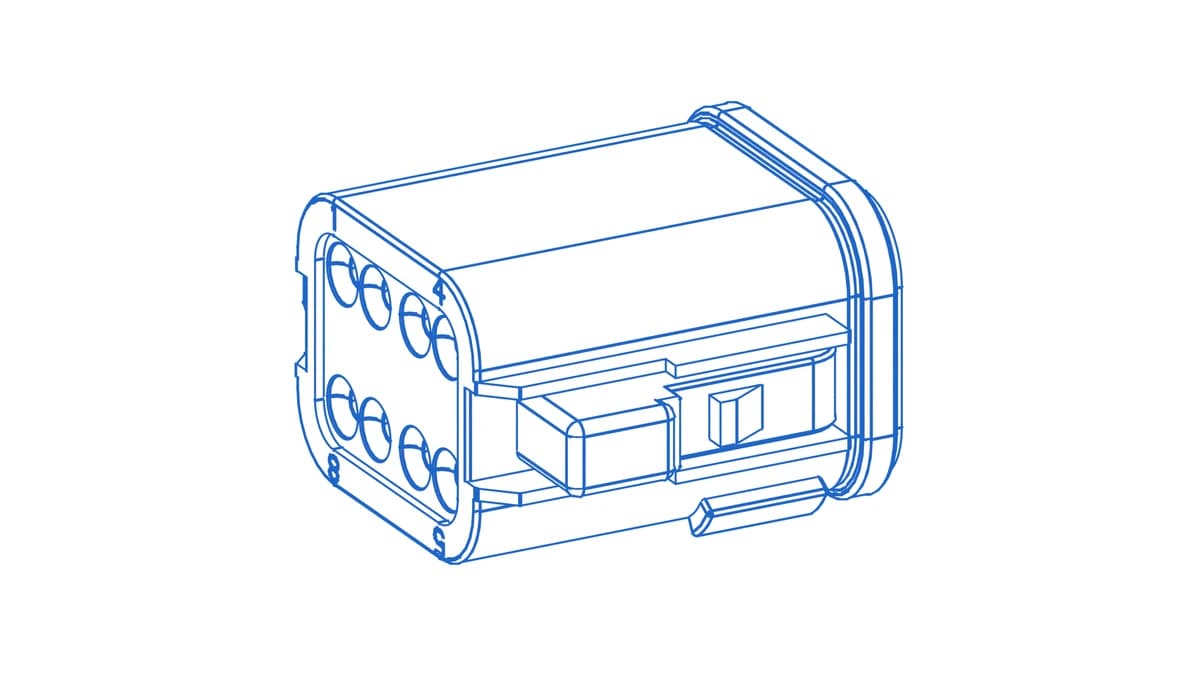
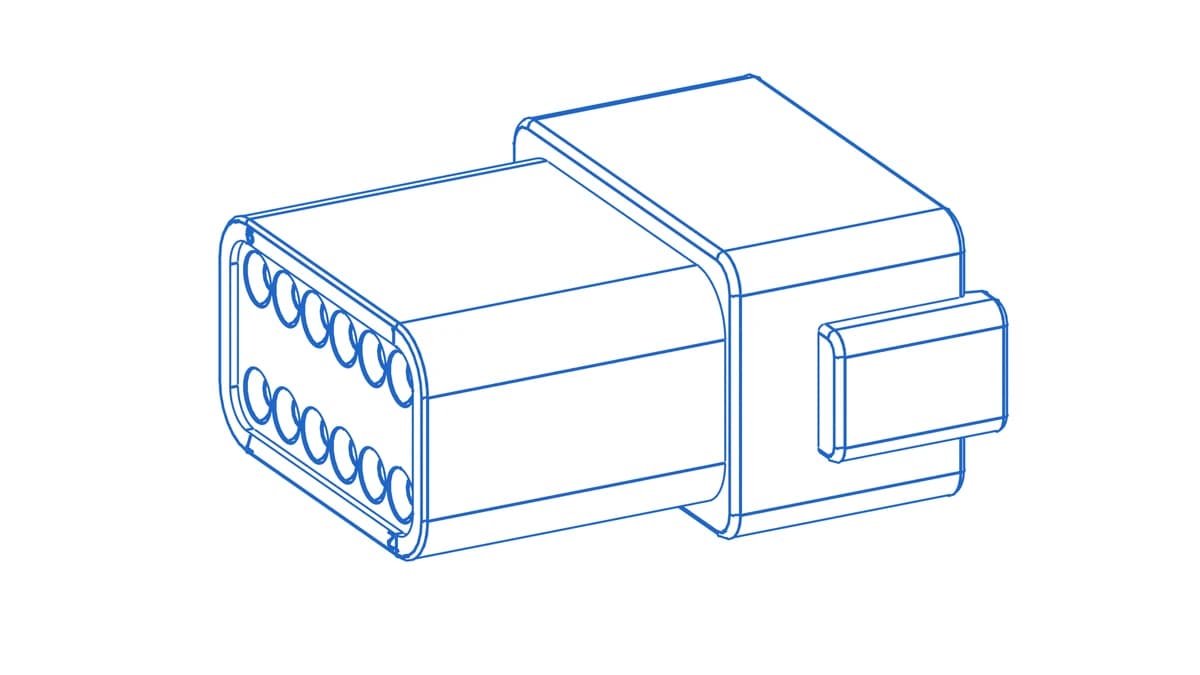
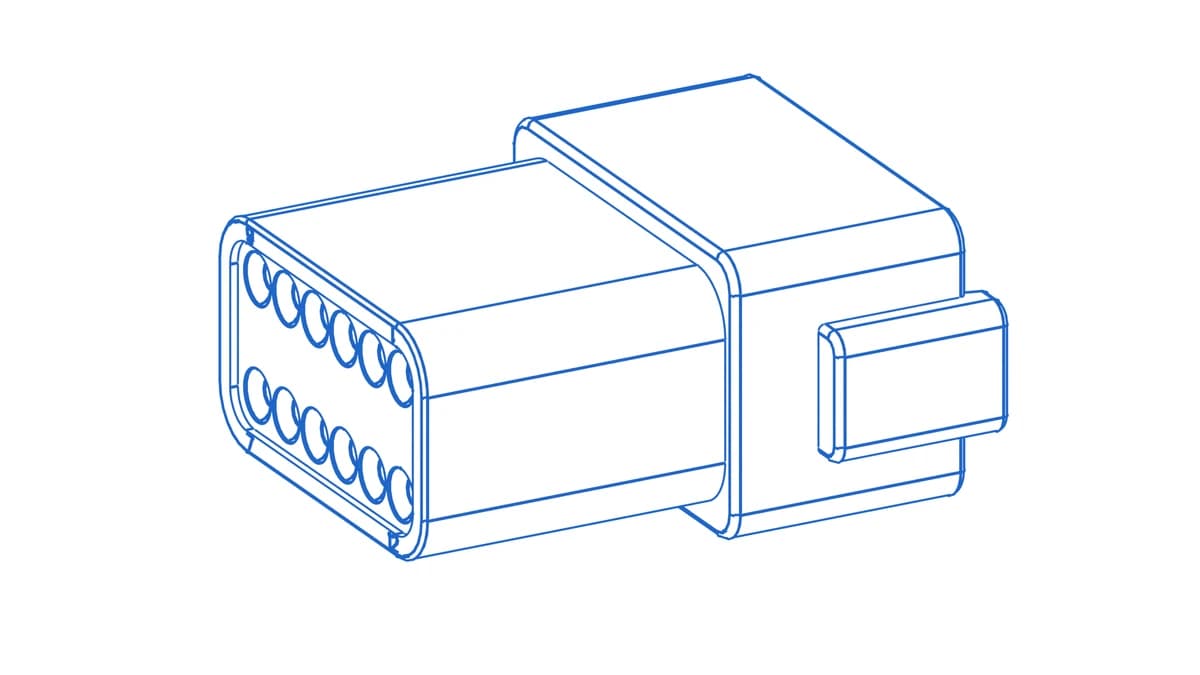
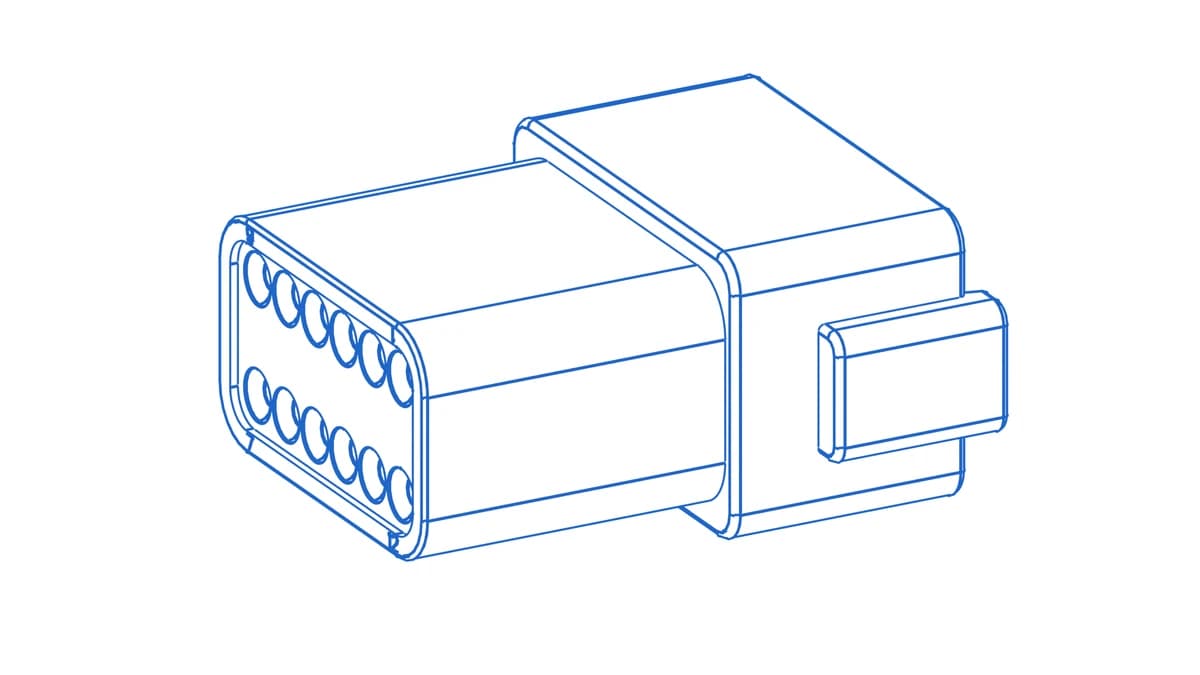
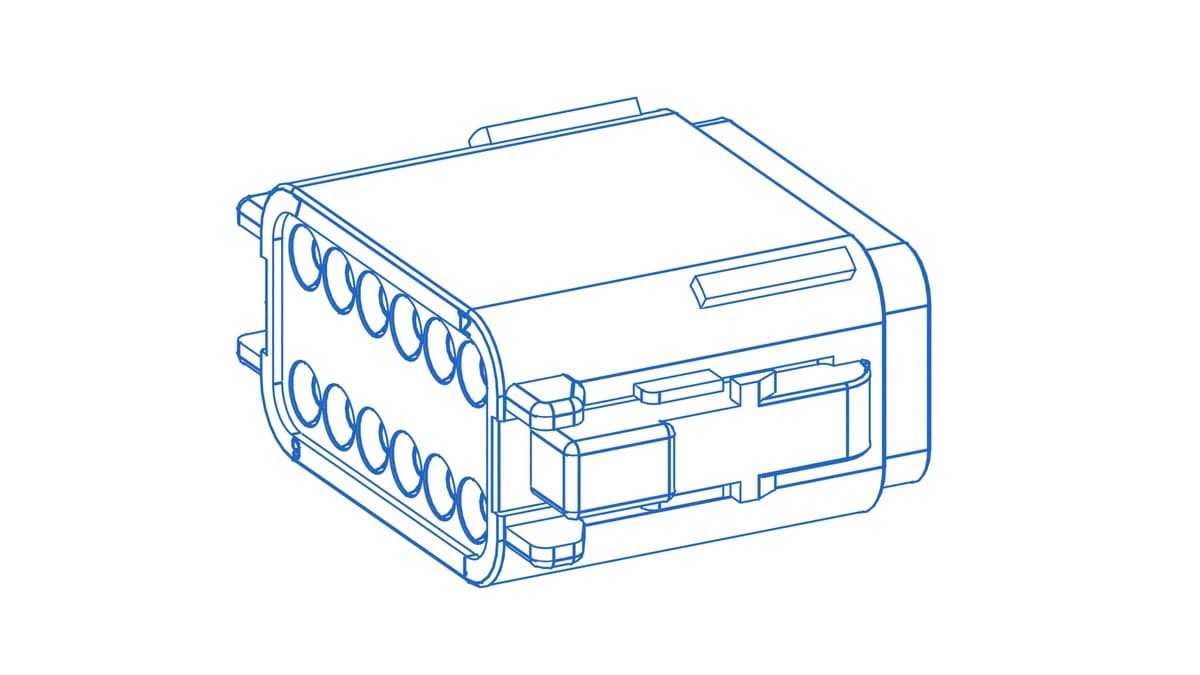
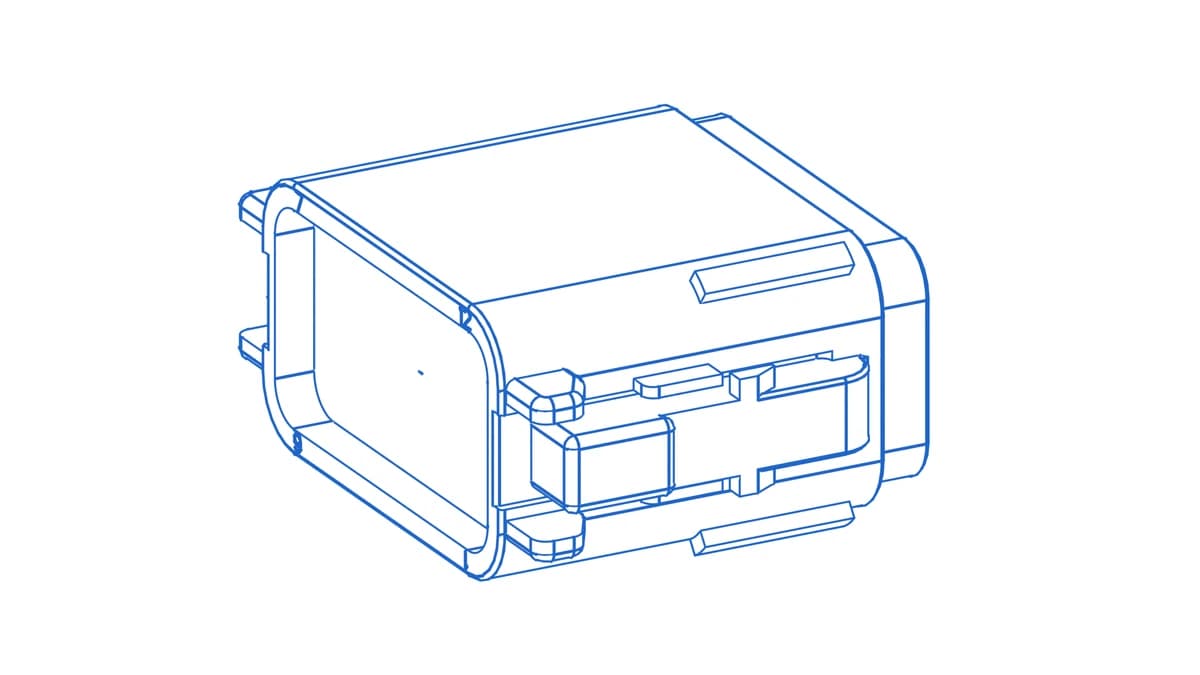
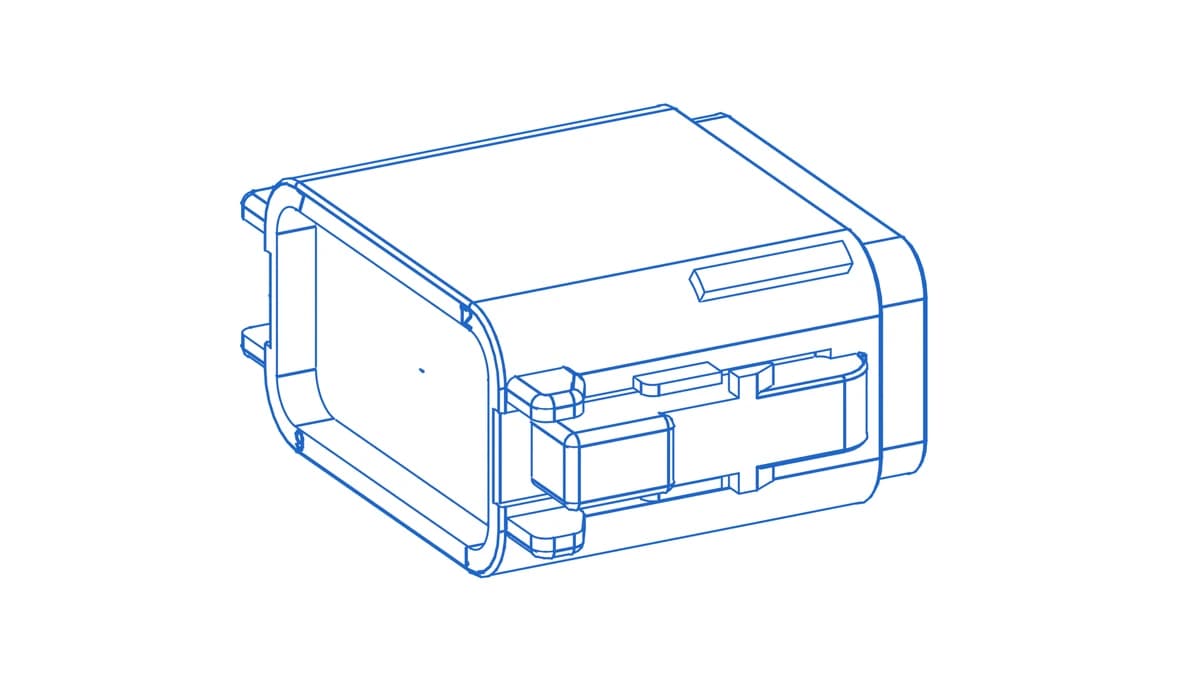
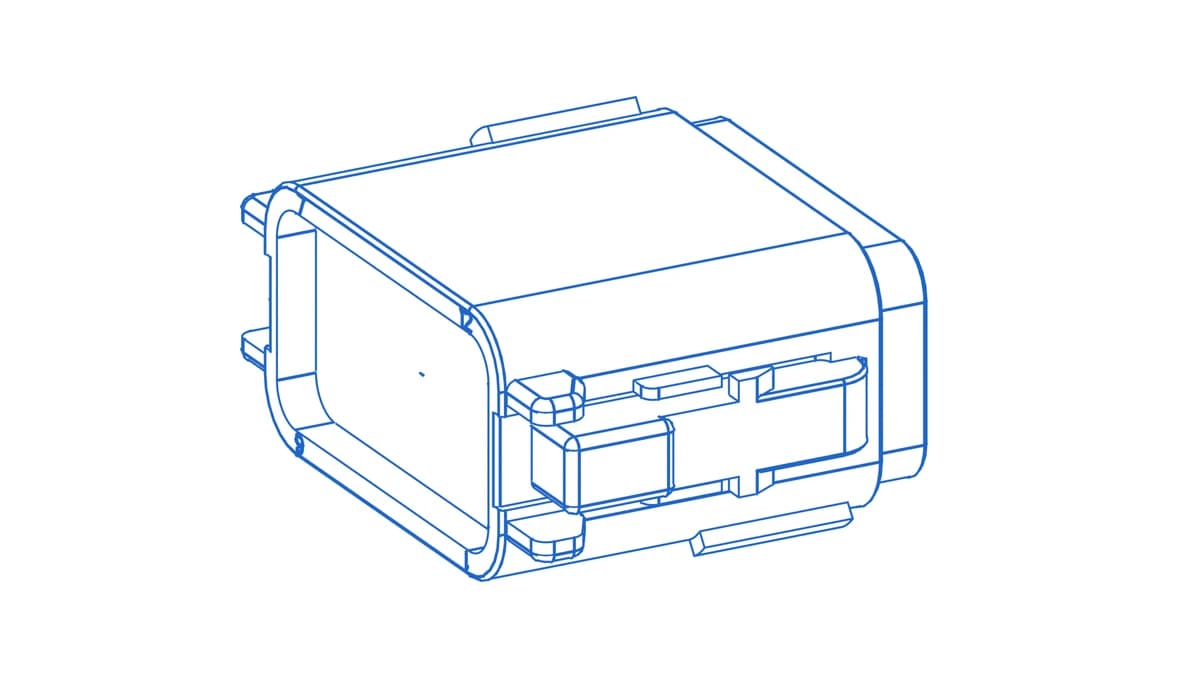
DT shell option
Bussed Deutsch DT receptacles keep the normal DT shell and sealing system, but replace individual circuits with internal stamped bus contacts. Selected cavities are tied together inside the connector, so a sealed power or ground distribution point can avoid extra splice hardware in the harness.
Use them when several branches need the same feed, return, or common reference in a compact sealed package. The shell still follows DT size-16 current, wire, seal, and cavity-plug rules, so the bus layout needs to match the circuit current and service plan.
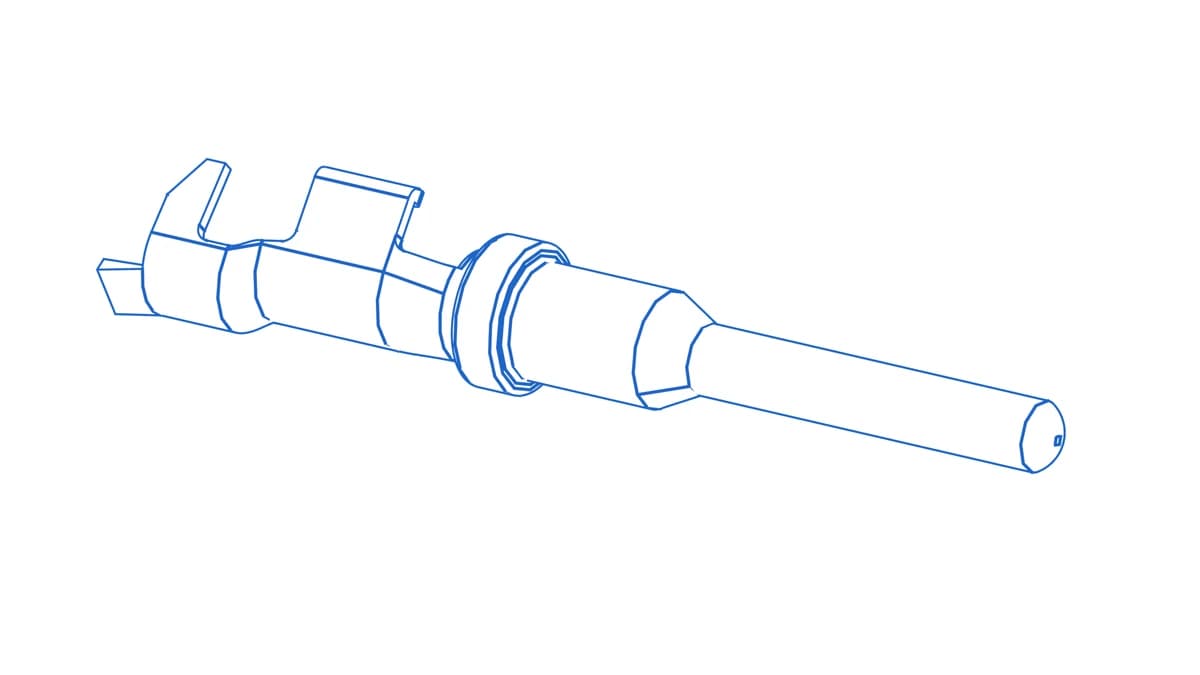
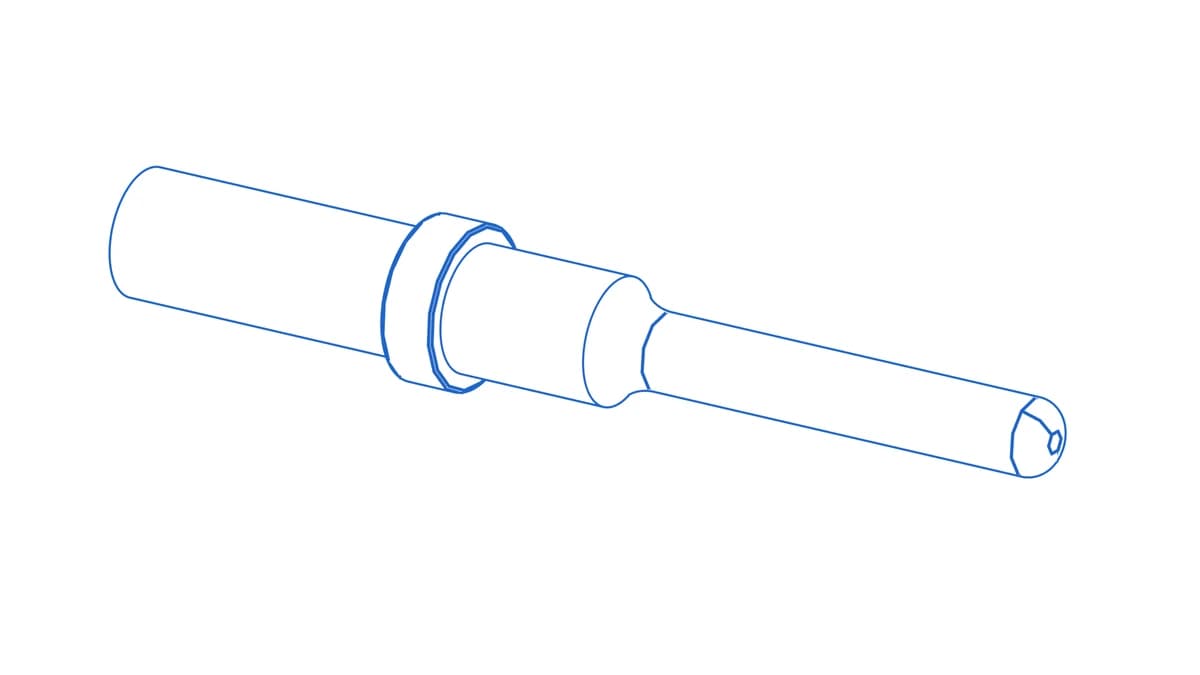
For quoting, choose one contact style per connector: stamped and formed keeps cost down, while solid machined buys more current and vibration headroom.
Typical multipliers from common part data. Exact price comes from live quoting. The two biggest levers are contact construction and series.
We keep common DT parts on the shelf and quote non-stock variants against live supplier lead times. Genuine parts only. Standard AT parts can be used as a matching alternate source when a DT part runs short.
No. Size 16 is the contact size, not the amp rating. A DT size-16 contact can carry up to 13 A with the right contact and wire; smaller wire/contact combinations limit current.
Mated and correctly assembled, TE Deutsch DT is rated IP68. Some matching Amphenol AT variants advertise IP68/IP69K. Plug unused cavities and match the seal to your wire OD, or you lose the rating.
Stamped is lower cost and fine for most builds. Solid machined contacts support different wire ranges and more current headroom. Use the BOM contact style for the connector you are building.
Yes, for matching standard parts. AT intermates with the same DT footprint, but keying, enhanced seals, backshells, and accessories still need to be checked against the selected part.
DT04 is the receptacle housing and accepts pin contacts. DT06 is the plug housing and accepts socket contacts. A complete DT connection normally uses one DT04 side, one DT06 side, matching wedgelocks, contacts, rear seals, and cavity plugs for any unused positions.
No. DT, DTM, and DTP use the same general sealed-connector concept, but they are different physical series with different contact sizes. Use DTM for smaller signal circuits, DT for size-16 mid-current circuits, and DTP for larger size-12 power circuits.
A bussed DT connector uses stamped internal bus contacts inside a DT receptacle shell so several cavities can share a feed, ground, or signal return without separate harness splices. The bus layout still has to match the selected shell size, mating plug, and circuit current.
DT is the size-16 series and can cover roughly 20-14 AWG with the right contact. The exact range depends on the contact style and the rear seal; match both current rating and insulation OD, not just AWG.
N-seal is the normal DT rear seal for about 2.24-3.68 mm insulation OD. E-seal is the reduced seal for smaller insulation, about 1.35-3.05 mm OD.
The wedgelock is the secondary lock. After contacts snap into the housing, the wedgelock seats over them and helps prevent the contacts from backing out under vibration or service handling.
Yes. Any empty cavity needs a sealing plug, otherwise the connector has an open leak path and the sealed IP rating no longer applies.
Keying changes the mating geometry so look-alike connectors cannot be cross-plugged. On 8- and 12-position DT housings the key is part of the body; on some smaller DT connectors keyed wedgelock sets provide the keyed variants.
Yes, when the circuit is within DT's current and wire limits. DT is commonly used for sealed harness breakpoints in vehicles, agricultural equipment, construction equipment, sensors, relays, lamps, and mid-current control circuits.
Related Links
Selected service, solution, and industry pages that match DT connector use cases.
Choose DT or DTM by contact size, current, wire range, and 12-way fit. They do not intermate.
Deutsch DT is a common fit for sealed mid-current field harnesses.
Rugged sensor, solenoid, and equipment wiring for dust, mud, and washdown exposure.
Prototype and telematics harnesses that need sealed serviceable connectors.
Pick positions, contacts, and wire. See the price as you go, then send it to our floor.
Newsletter
Join our community and be the first to know about the latest in wire harness prototyping. Get exclusive insights, tips, and updates delivered straight to your inbox.