Blog
Flexibility and Bend Radius Considerations for your Wiring Harness
To determine a wire or cable's bend radius, data sheets generally provide a multiplier that is used against the wire's outer diameter (OD). This multiplier indicates the smallest radius at which the cable can be bent without causing damage. Bend radius is influenced by factors like insulation material, construction (solid vs. stranded), wire gauge, and OD. More flexible materials, such as silicone and GXL, allow for tighter bends, while stiffer materials, like PVC, require larger bend radii.
Figure 1 illustrates how to calculate the bend radius based on the OD and multiplier from the data sheet.
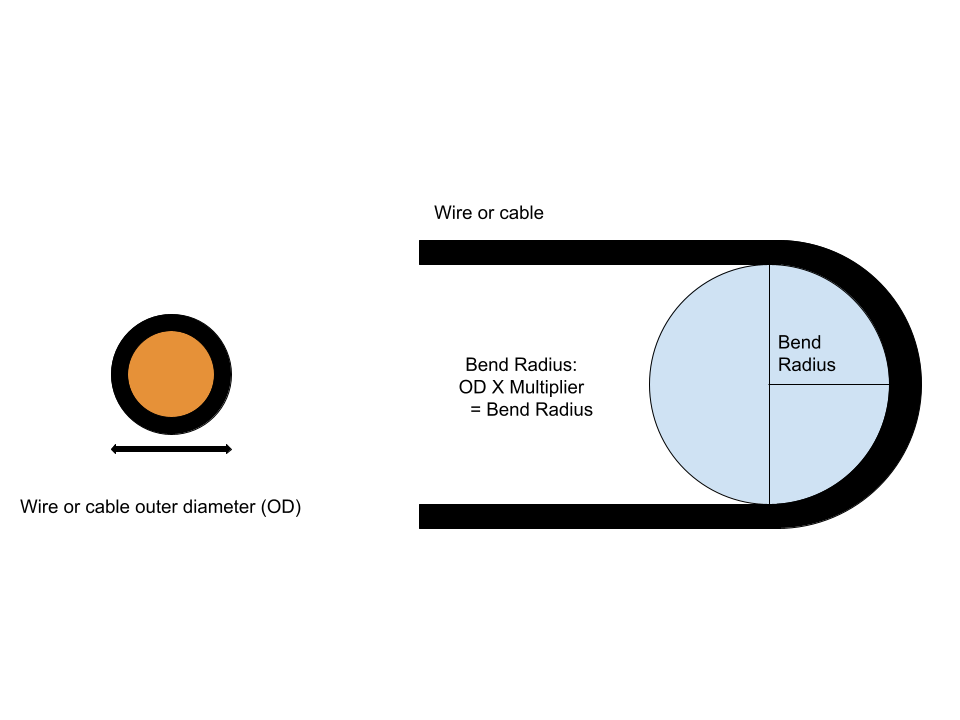
Figure 1. How to determine a wire or cable’s bend radius
In general applications requiring tight bends, silicone wires are a versatile choice due to their flexibility and ability to handle small bend radii, typically 6-8 times the OD. For more intense applications involving frequent or continuous movement, such as drag chains or robotic arms, cables like Igus Chainflex and Belden Flex are specifically designed for durability and long-term performance without degradation, even in high-motion environments.
Table 1 below outlines common bend radius values for various wire types used by MiniProto.
If you can’t find the specific bend radius in a cable’s data sheet, a safe rule of thumb is to multiply the outer diameter (OD) by 12 to determine the minimum bend radius.
| Type | Category | Bend Radius (~x OD) | Application |
|---|---|---|---|
| UL1007 | wire | 10-12 | Static wiring, low movement, general-purpose use |
| Silicone | wire | 6-8 | Prototyping, tight bends, high-temp environments |
| Non-Flex Cable (ex. UL2464) | cable | 10-12 | Static cabling, minimal movement, general purpose |
| High-Flex Cable (ex. Igus Chainflex) | cable | 4-8 | Dynamic applications like cable carriers, robotics |
Table 1. Wire types, bend radius and applications
Conclusion
When selecting a wire or cable, always ensure the bend radius aligns with your application’s requirements. Check your geometry and confirm that the cable can be bent within its specified limits to avoid damage or performance issues. If detailed specifications aren’t available, applying the rule of thumb (12 times the outer diameter) provides a safe guideline.
For further reading on bend radius, refer to the Keystone Cable guide and the Igus blog.
Related Links
Related Posts
Connector Keying and Polarization, and Why They Matter
What connector keying and polarization do, how Deutsch and MIL-DTL-38999 handle them, and why to plan keying early in your design.
Crimp vs. Solder: Choosing the Right Wire Termination
When to crimp, when to solder, and why crimped contacts are the default in wire harnesses. Practical guidance from the shop floor.
Shielding Basics: A Guide to Reducing Electromagnetic Interference
This article explains how EMI shielding mitigates electromagnetic interference through reflection and conduction to ground. It covers shielding strategies for magnetic and electric fields, compares cable shielding types (non-shielded, foil, braided, and combination), and discusses shielding effectiveness in decibels (dB). Giving a basic understanding of these aspects helps engineers select the right shielded cable for their custom harness applications.
Need a custom harness?
Newsletter
Stay Wired with MiniProto.
Join our community and be the first to know about the latest in wire harness prototyping. Get exclusive insights, tips, and updates delivered straight to your inbox.
- Latest Prototyping Trends
- Stay ahead in the field with our articles on MiniProto updates, new technologies, design tips, and industry insights.
- No Spam, Only Value
- We respect your inbox. Receive only the most relevant updates and offers, without the clutter of unwanted emails.