Blog
Wires or Cables, Is There Even a Difference?
Wires or Cables, Is There Even a Difference?
Before diving into their practical applications, it’s important to clarify the terminology, as "wires" and "cables" are often incorrectly used interchangeably.
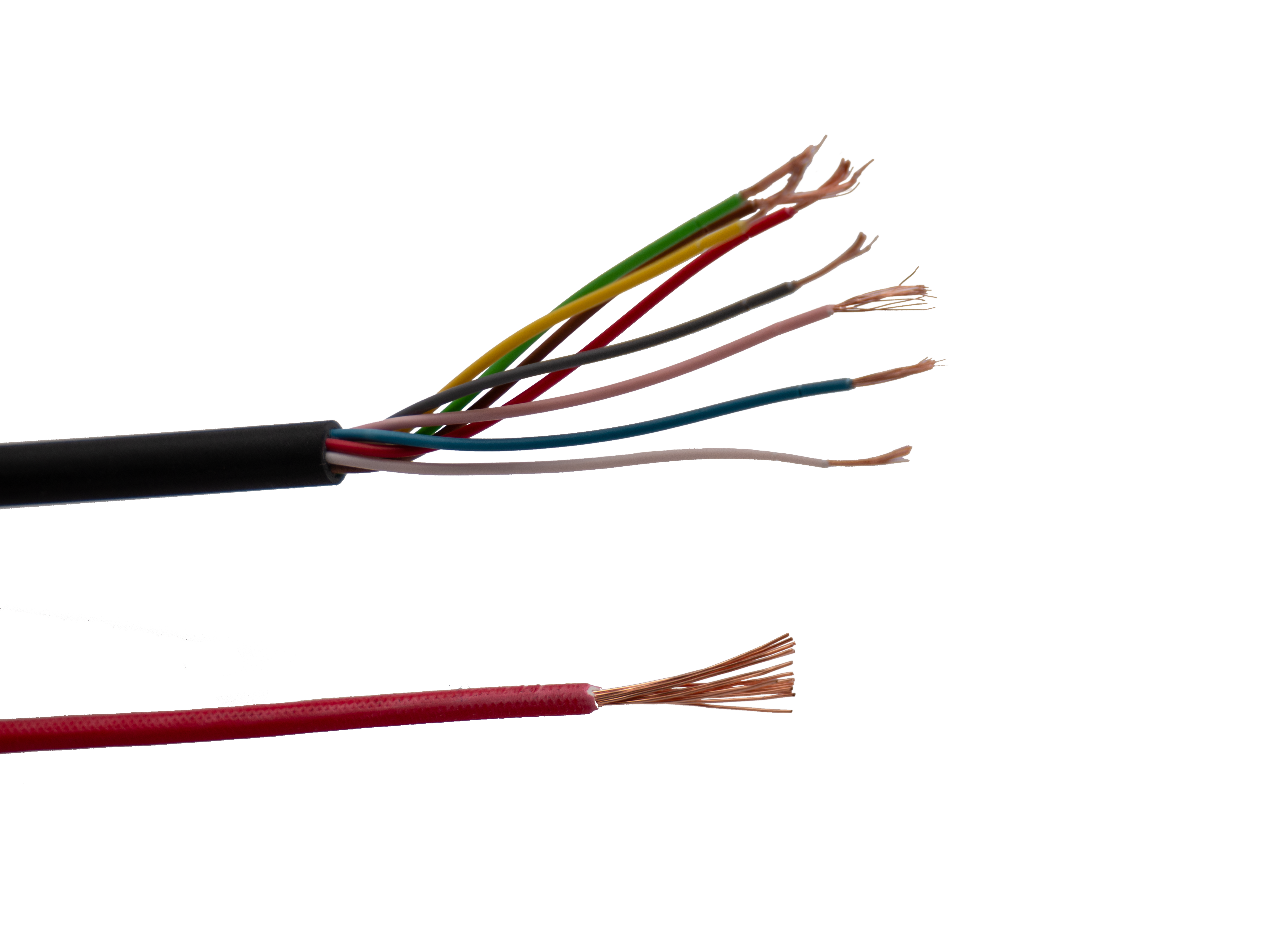
A wire is a single conductor, typically made of copper or aluminum, that carries electrical current.
A cable, however, consists of multiple wires bundled together, almost always encased in an insulating jacket.
This distinction is crucial: while wires are often suited for short distance and simpler applications where specific customization or routing flexibility is needed, cables are better designed for more complex applications, particularly where environmental protection or durability is needed.
For more complex wiring harnesses, cables can save space, keep things organized, and reduce costs when sleeving, shielding, or twisting is required. Although cables may have a higher material cost, this is often offset by the labor and additional material savings of not having to individually sleeve or shield wires. Cables also offer better durability and protection against environmental conditions, making them ideal for long distances, harsh environments, areas with high electromagnetic interference, and high-motion applications. On the other hand, individual wires offer more flexibility in custom routing, colors, twisting, and sleeving, making them suitable for designs that require specific configurations not easily achieved with pre-made cables. However, wires tend to be less durable than cables, particularly in environments where abrasion or external factors may be a concern.
The Verdict:
Cables are the preferred choice for harnesses that need shielding, twisted pairs, durability in challenging environments, or resilience in high-motion applications. They provide superior protection and organization, eliminating the need for separate sleeving.
Individual wires are ideal for simpler harnesses with fewer conductors, offering more flexibility, custom routing, and specific color combinations. They allow for greater customization and adaptability in cases where those factors are priorities.
Need help getting your wire harnesses made? MiniProto can help.
Related Links
Related Posts
Connector Keying and Polarization, and Why They Matter
What connector keying and polarization do, how Deutsch and MIL-DTL-38999 handle them, and why to plan keying early in your design.
Crimp vs. Solder: Choosing the Right Wire Termination
When to crimp, when to solder, and why crimped contacts are the default in wire harnesses. Practical guidance from the shop floor.
Shielding Basics: A Guide to Reducing Electromagnetic Interference
This article explains how EMI shielding mitigates electromagnetic interference through reflection and conduction to ground. It covers shielding strategies for magnetic and electric fields, compares cable shielding types (non-shielded, foil, braided, and combination), and discusses shielding effectiveness in decibels (dB). Giving a basic understanding of these aspects helps engineers select the right shielded cable for their custom harness applications.
Need a custom harness?
Newsletter
Stay Wired with MiniProto.
Join our community and be the first to know about the latest in wire harness prototyping. Get exclusive insights, tips, and updates delivered straight to your inbox.
- Latest Prototyping Trends
- Stay ahead in the field with our articles on MiniProto updates, new technologies, design tips, and industry insights.
- No Spam, Only Value
- We respect your inbox. Receive only the most relevant updates and offers, without the clutter of unwanted emails.